The 30-yard container measures roughly 22 feet long, 8 feet wide, and 6 feet tall, giving it the vertical walls that make loading bulky material, old cabinetry, framing lumber, torn-out flooring, easier than heaving…
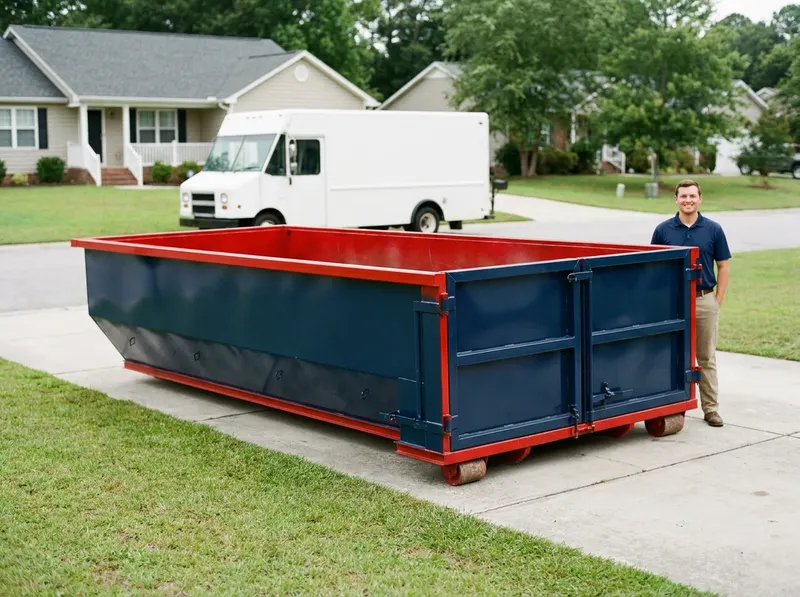
The 30-yard container measures roughly 22 feet long, 8 feet wide, and 6 feet tall, giving it the vertical walls that make loading bulky material, old cabinetry, framing lumber, torn-out flooring, easier than heaving debris over a shorter side. It holds about 30 cubic yards, which is close to 12 full pickup-truck loads. That volume is why the 30-yard is the standard pick for a roof tear-off on a larger Landfall or Autumn Hall home, a full kitchen-and-bath gut, or an estate cleanout where furniture and boxes pile up fast.
Size choice comes down to volume against driveway space. A 10-yard ($595) fits a single-room remodel; a 20-yard ($695) covers most one-bathroom or small-kitchen jobs; the 30-yard ($795) steps up for whole-house work and roof jobs; and the 40-yard ($895) is reserved for large commercial or new-construction debris. If the project is a single-room cleanout, the 20-yard usually saves money and space. If it is a roof tear-off, a whole-house renovation, or an estate clear-out in Forest Hills or Pine Valley, the 30-yard is the right call, the trade-off is the driveway footprint, since a 22-foot roll-off needs a clear straight run to set down level.
Driveway access is the piece out-of-town brokers cannot check. Tight coastal driveways in Sunset Park, narrow historic-district lots near the Downtown Riverwalk, and shell or paver driveways in Ogden and Masonboro all change where a 30-yard can safely sit. Placement is scouted before drop-off, and boards can be laid under the wheels to protect a soft or decorative surface. On lots where a 30-yard will not fit, a 20-yard on a shorter footprint is the usual substitute.
How it works is straightforward. First, call (910) 348-4641 with your address and project. Second, confirm the drop-off spot and date. Third, load the container at your pace over the rental period. Fourth, call for pickup when it is full or the job wraps. A 30-yard dumpster rental is not junk removal, the crew drops the container and hauls it away, and you or your contractor load it. Heavy, dense material like concrete, brick, dirt, and roofing tile is best kept to a smaller box, since dense loads can exceed what a full 30-yard can legally carry on the road; that limit is worth confirming on the phone before you fill one with masonry.
Every job gets a firm, written price after a free on-site visit.
Tell us about your 30-yard dumpster rental job in Wilmington and we'll send a clear, written quote, usually the same day.
 Joseph Dumpster Rental